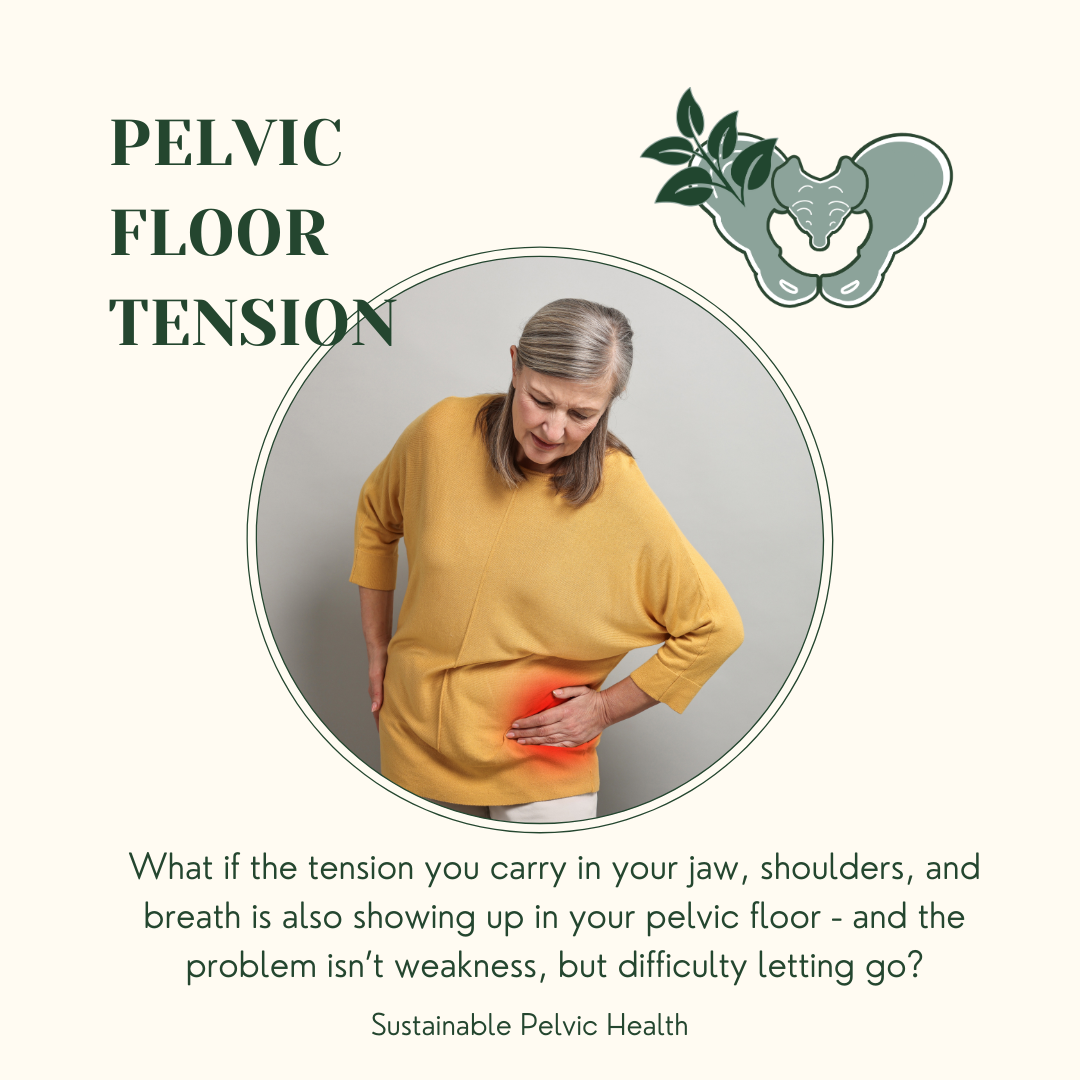
Have you ever caught yourself clenching your jaw, tightening your shoulders, or holding your breath without even realizing it?Maybe you've been sitting at your desk for hours, driving in traffic, or trying to get through a particularly stressful day. Your body is tense, but you don't notice until you finally stop and take a breath. Now consider this: what if your pelvic floor is doing something similar? We talk a lot about pelvic floor weakness, but tension is another important part of the conversation. For many people, the issue isn't that their pelvic floor muscles aren't strong enough. It's that those muscles have difficulty relaxing. And that distinction matters.
What is pelvic floor tension?
Your pelvic floor is a group of muscles that form a supportive foundation at the bottom of your pelvis. These muscles play a role in bladder and bowel function, sexual function, and supporting your pelvic organs. Like any other muscle group, your pelvic floor needs to be able to contract and relax. But sometimes those muscles remain overly tight or have difficulty releasing. This is often referred to as a high-tone or overactive pelvic floor. Instead of moving between contraction and relaxation comfortably, the muscles may stay in a protective, braced state. This can contribute to symptoms such as: Pelvic pain, pressure, or discomfort. Pain with penetration or intimacy. Difficulty starting or completing urination.Constipation or difficulty emptying your bowels. A feeling of tightness or tension in the pelvic region. Discomfort with certain movements or prolonged sitting. Not everyone experiences pelvic floor tension in the same way. Symptoms can vary, and they can overlap with other pelvic health conditions. If you're experiencing persistent discomfort or changes in bladder or bowel function, an individualized evaluation can help identify what's happening.
Why is my body holding so much tension?
Our bodies are remarkably good at trying to protect us. When we experience stress, discomfort, pain, or trauma, the nervous system can respond by increasing muscle tension and creating protective patterns. Think about what happens when you feel anxious. You might raise your shoulders, tighten your stomach, clench your jaw, or hold your breath. The pelvic floor can respond in similar ways.For some people, this tension becomes a pattern they don't even recognize anymore. Their muscles may stay partially contracted throughout the day, even when there isn't an immediate reason to brace. Chronic stress, previous painful experiences, trauma, and habitual muscle guarding can all be part of the picture. This doesn't mean tension is always caused by trauma or stress. There are many possible contributors, and every person's experience deserves to be understood individually. The important thing to remember is that your body isn't necessarily working against you. It may be trying to protect you using a pattern that is no longer serving you well.
Why more Kegels aren't always the answer.
Kegels are exercises that involve contracting the pelvic floor muscles. They can be helpful for some people, particularly when weakness or coordination difficulties are part of the problem. But here's where things get complicated.If your pelvic floor is already holding too much tension, adding more contractions without first addressing your ability to relax may not be helpful. For some people, it can make symptoms worse. Imagine keeping your shoulders lifted toward your ears all day and then being told to do exercises that involve tightening them even more. You might need something different. Your pelvic floor needs both strength and flexibility. It needs to know how to contract when appropriate and how to release when it's time. Before starting a pelvic floor exercise program, it's important to understand what your muscles are actually doing. More exercise isn't automatically better. The right kind of support matters.
The connection between breathing, your nervous system, and your pelvic floor.
Your breathing and pelvic floor work together as part of a coordinated system. As you inhale, your diaphragm moves downward, and your pelvic floor generally responds with a gentle lengthening or relaxation. As you exhale, both structures move back upward. This relationship is one reason breathing can be a useful starting point when working with pelvic floor tension. When we're stressed, we may breathe shallowly, hold our breath, or unconsciously brace through our abdomen and pelvis. Slowing down and allowing your breath to move naturally can create an opportunity for your body to experience a different pattern. This isn't about forcing your pelvic floor to relax or taking enormous breaths. It's about giving your body a chance to notice movement, reduce unnecessary bracing, and practice letting go.
Gentle ways to begin releasing tension.
If you suspect your pelvic floor is holding too much tension, you don't necessarily need to start with an intense exercise routine. Sometimes the first step is simply becoming more aware of what your body is doing.
Here are a few gentle places to begin:
1. Notice where you're holding tension. Check in with your jaw, shoulders, abdomen, and pelvic area throughout the day. Are you clenching without realizing it? Awareness is a useful first step.
2. Practice comfortable, relaxed breathing. Find a comfortable position and allow your breath to move naturally. Notice what happens in your rib cage and abdomen as you inhale and exhale. Avoid forcing or straining.
3. Give yourself permission to stop bracing. You don't need to hold your stomach in or tighten your muscles all day. Experiment with allowing your abdomen to soften when you're resting or breathing comfortably.
4. Explore comfortable positions. Some people find supported positions, such as lying on their back with their knees supported or resting comfortably on their side, helpful for reducing unnecessary muscle guarding.
5. Don't push through pain. Stretching, exercises, or other techniques should not create more discomfort. If something increases your symptoms, stop and seek individualized guidance. These ideas are starting points, not a substitute for an assessment. Pelvic floor tension can be complex, and what helps one person may not be appropriate for another.
You may not need to strengthen. You may need to learn how to release.
One of the most important things I want people to understand is that pelvic floor health isn't just about how strong your muscles are. It's also about coordination, mobility, awareness, and the ability to relax. If you've been dealing with pelvic discomfort, painful intimacy, constipation, or urinary symptoms, please don't assume the answer is simply to do more Kegels. Your body deserves more than a one-size-fits-all solution. A pelvic health occupational therapist can help evaluate what's happening, identify contributing factors, and develop an individualized plan that respects your body, your history, and your goals. You don't have to spend your day holding everything together. Sometimes healing begins with learning that you can let go.
Ready to understand what your pelvic floor actually needs?
Reach out to Sustainable Pelvic Health to learn more about individualized pelvic health support. Your body isn't failing you. Let's figure out what it's asking for.
Amber Schmitt
www.sustainablepelvichealth.com
#PelvicFloorTherapy #PelvicHealth #OccupationalTherapy #SustainablePelvicHealth